.avif)

Brief Description
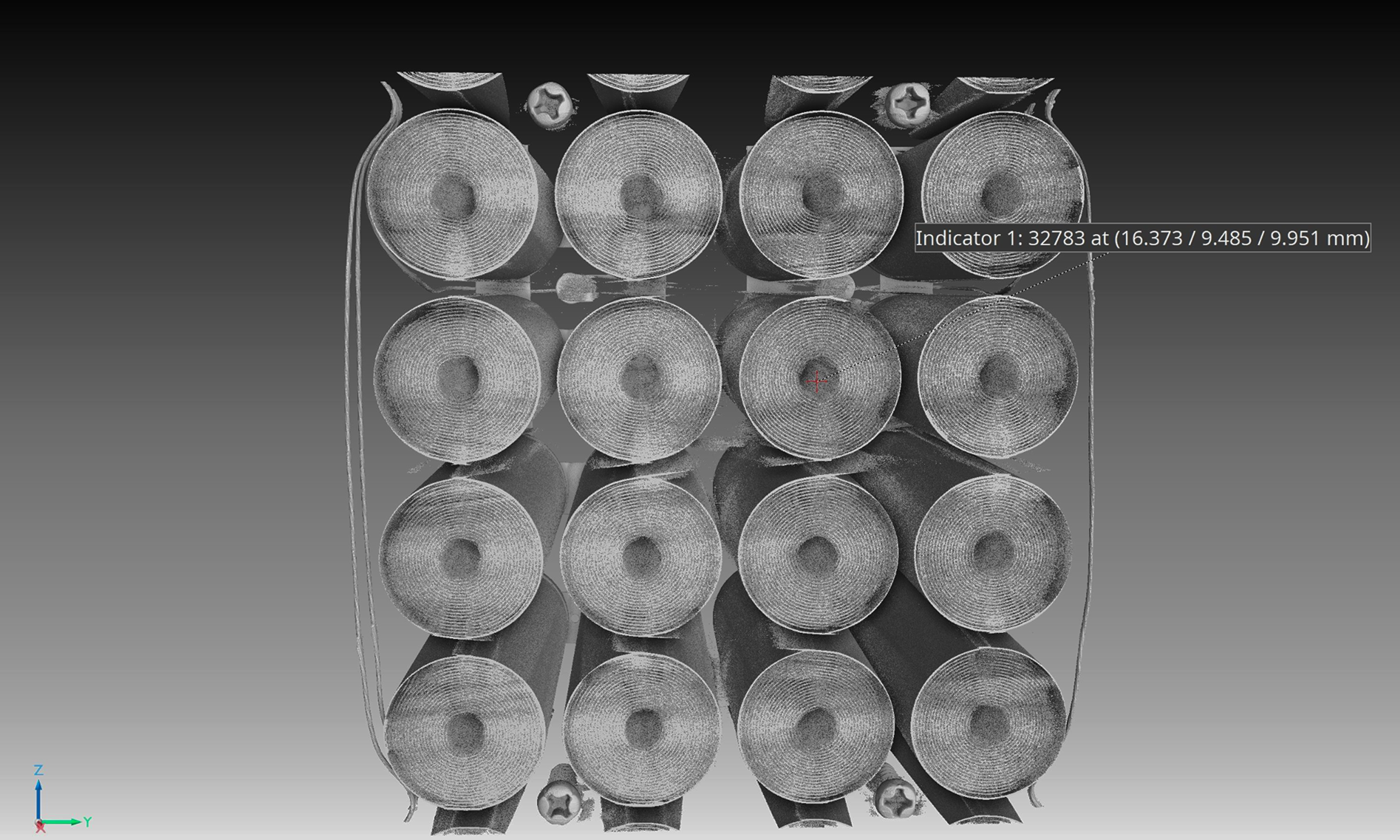
The RELIBRE project (Re-Use of Battery Cells: CT Analysis of Lithium-Ion Batteries for Assessing Functionally and Safety-Critical Characteristics for the Second Life Phase) aims to develop an innovative, non-destructive analysis method for evaluating the reusability of used lithium-ion batteries (LIBs). Industrial computed tomography (CT) will be used to establish a methodologically sound diagnostic approach that provides insights into the internal structure and structural changes of battery cells – without having to open or damage them.
The central approach is to identify typical aging and degradation patterns that allow conclusions to be drawn about the safety and remaining lifespan of the cells. The particular challenge is to safely and reliably approve batteries for a second life, even those without a documented usage history, or to specifically direct them to recycling. To achieve this, RELIBRE combines non-destructive imaging, targeted single-cell analysis, complementary destructive methods, and comprehensive data processing to derive reliable decision-making bases.
The project thus makes an important contribution to the resource-efficient circular economy of strategically relevant raw materials such as lithium, cobalt, and nickel. At the same time, it strengthens the safety and efficiency of future second-life applications in stationary energy storage and electromobility. RELIBRE is designed as an industry- and practice-oriented project, bringing together partners from waste management, research, and testing technology.
Work Plan
The work plan is divided into six work packages:
- WP 1: Aging on the Test Bench
Procurement and artificial aging of LIB cells based on defined usage profiles. Collection of operational and condition data (e.g., current, voltage, internal resistance) and CT scans as a data basis. - WP 2: Development of a Measurement Strategy
Development and optimization of standardized CT measurement strategies for detecting functionally and safety-critical changes. - WP 3: Cell Diagnostics
Non-destructive and complementary destructive testing methods for precise categorization of failure patterns (e.g., microscopy, impedance measurement). - WP 4: Analysis of CT Data
Evaluation of CT data for correlation with aging, failure structures, and usage history; development of models for assessing cause-and-effect relationships. - WP 5: Validation and Comparison with Other Testing Methods
Comparison and validation of CT results with other methods, and assessment of the potential for series testing (e.g., based on criteria such as precision, cost, environmental impact).
Our Role
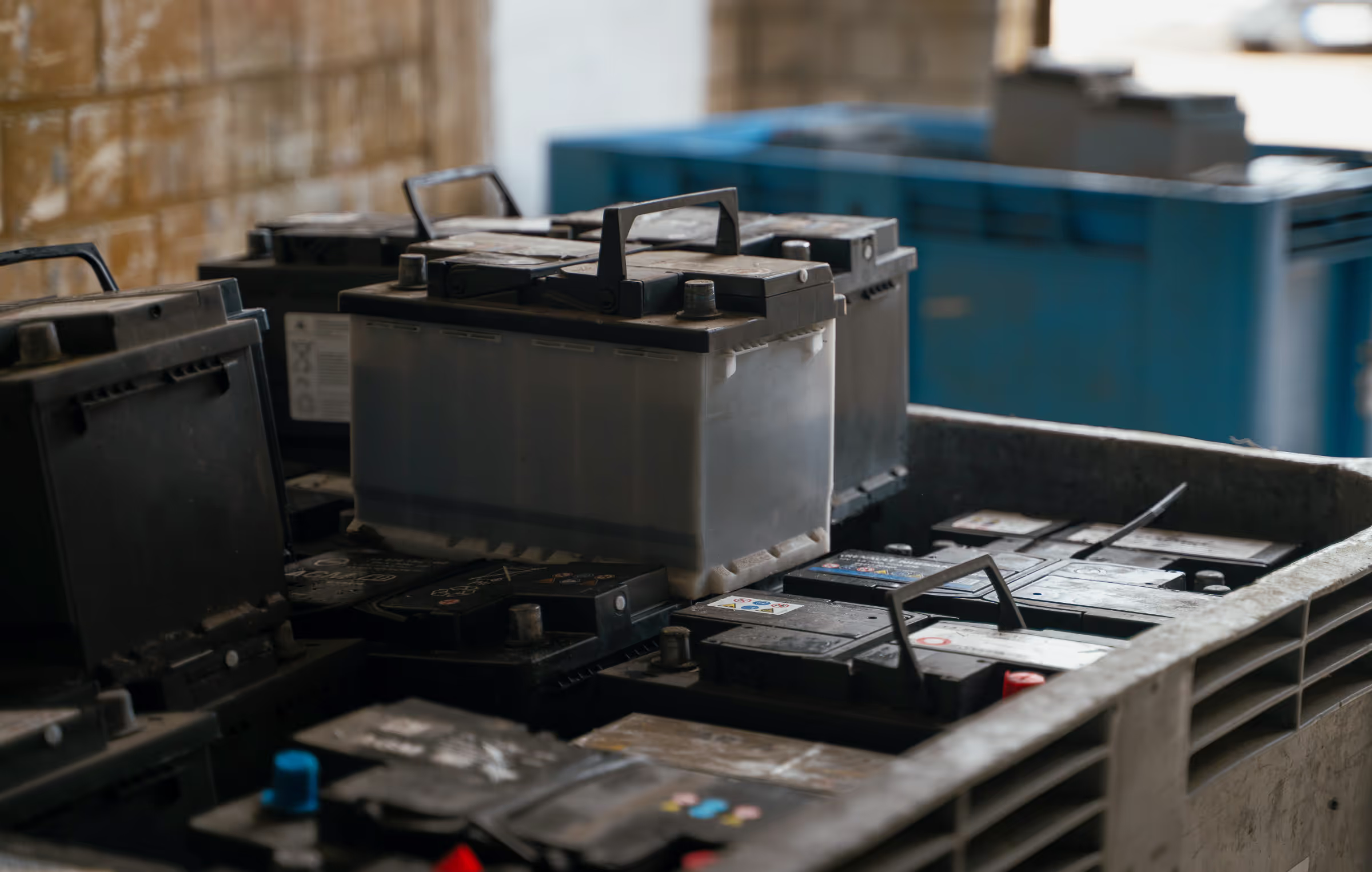
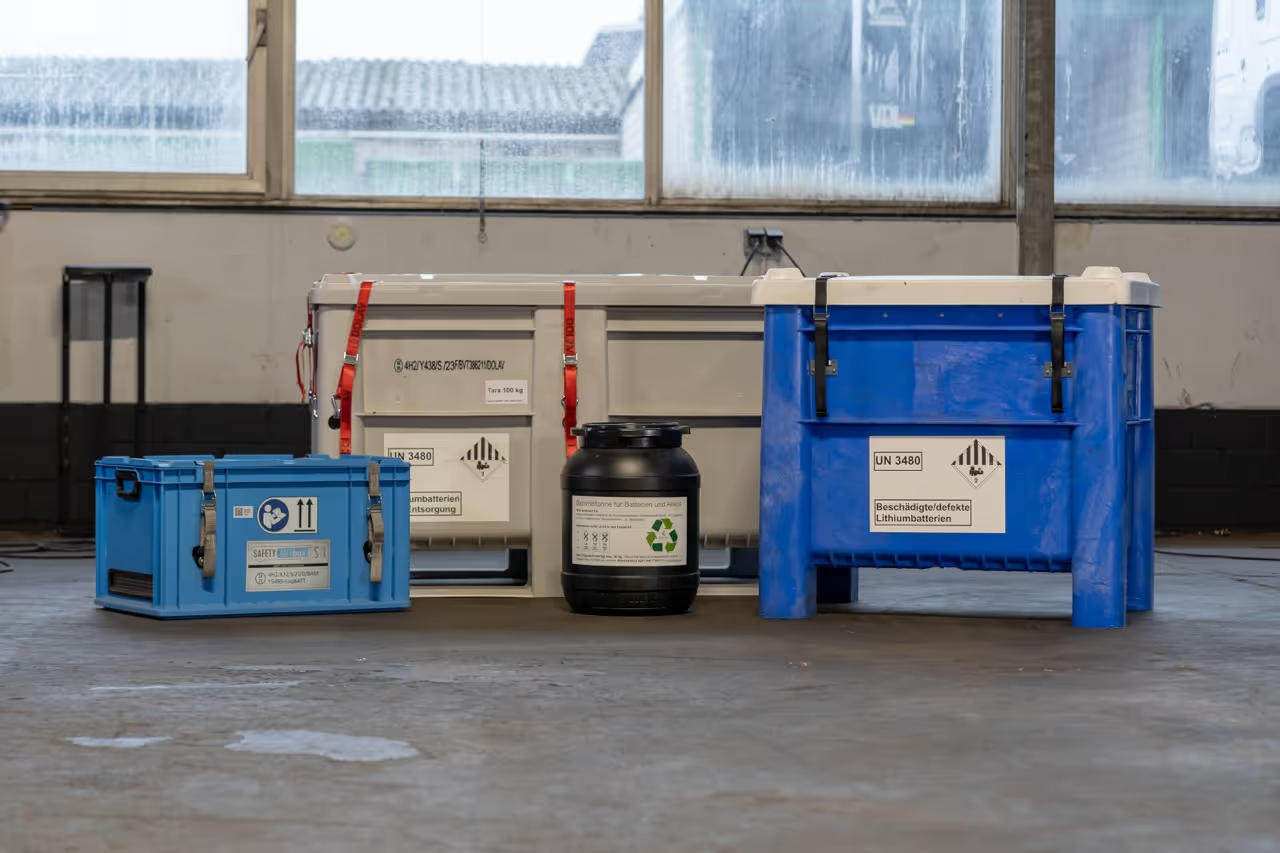
elorec GmbH contributes its experience as a certified waste management specialist to the project, providing aged lithium-ion batteries from old devices in various conditions. It undertakes tasks in pre-sorting, dismantling, and evaluating the batteries for reusability. In the project, elorec ensures that the investigations for non-destructive analysis and RUL determination are carried out under realistic conditions. Furthermore, elorec participates in the classification and logging of LIBs and provides practical feedback on the implementability of the developed methods in operational practice.
Funded by the German Federal Foundation for the Environment