.avif)

Summary
The research project aims to identify and develop secondary raw material sources for battery cell production. The focus is on End-of-Life (EoL) products that are not batteries. Suitable recycling processes for these EoL products will be developed, and the recovered recyclates will be resynthesized into NMC active material and reintegrated into test cells. A final performance evaluation and limit value analysis will provide insights into impurity tolerances.
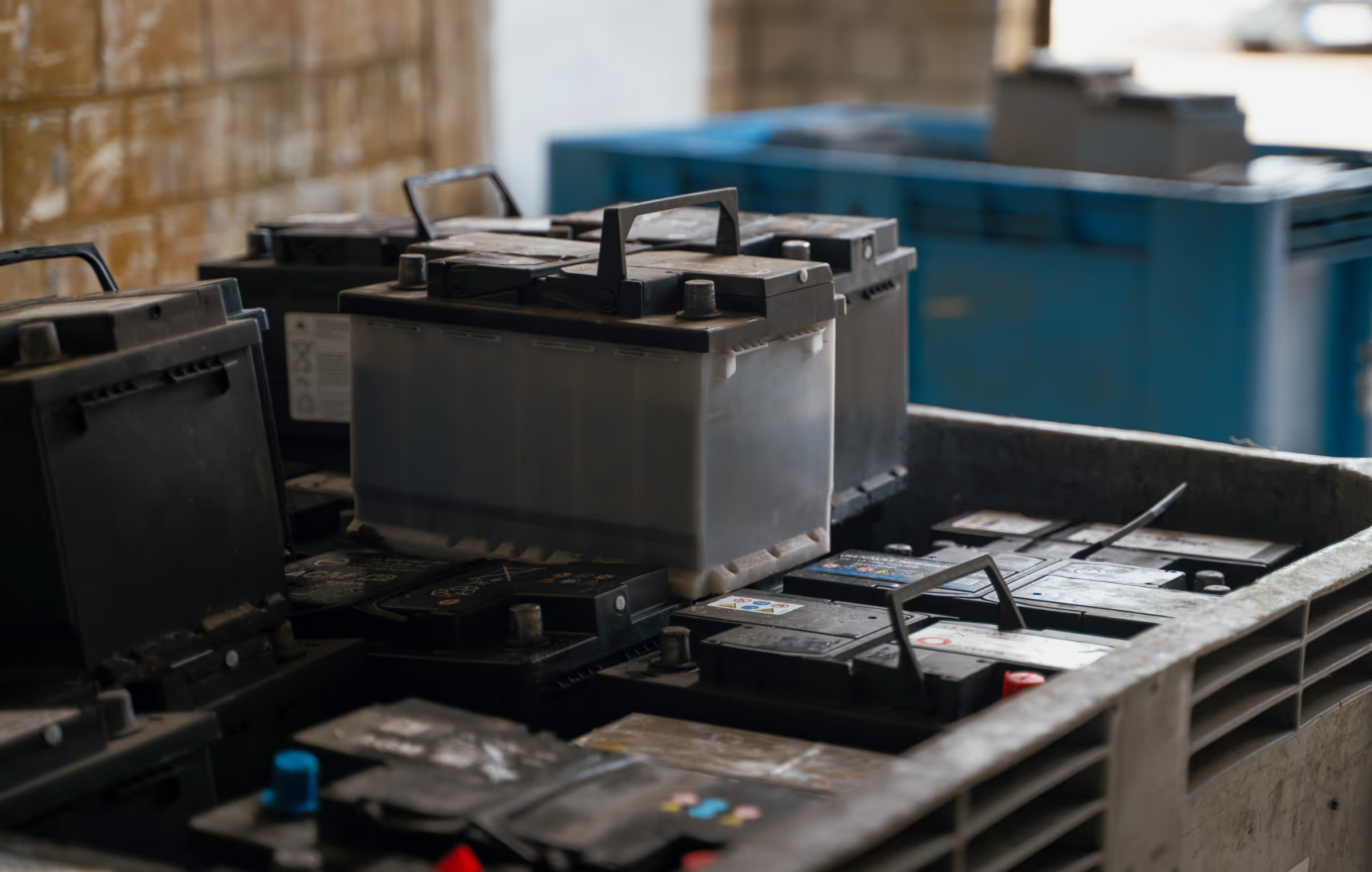
Currently, material cycles are not closed, meaning a significant mass flow of EoL products either ends up in landfills or is exported abroad as scrap, leading to the loss of valuable raw materials. Furthermore, the new EU Battery Regulation increases pressure on manufacturers to process certain minimum proportions of recycled materials in new batteries. However, the recycling market lacks sufficient end-of-life batteries, and European recycling capacities are only just being established.
Following a circular research approach, various EoL products containing lithium, nickel, manganese, and cobalt will be identified through material and substance flow analyses. Their recyclability and the usability of their raw materials for the battery industry will then be investigated. Since glass ceramics represent the second largest lithium-containing product group after lithium-ion batteries, and there is currently no regulated material cycle for them, a particular focus will be placed on this group.
An ecological and economic assessment will determine the extent to which the recovery of raw materials can be considered viable from these perspectives. This will involve examining upstream and downstream steps, from collection, dismantling, and pre-treatment to recovery and resynthesis, to analyze the ecological and economic viability of a circular business model. The assessment will continuously consider the entire system, taking into account possible alternative processing routes. Finally, the results obtained will be compiled in a 'Secondary Raw Material Map,' highlighting their transferability to other material flows, as well as optimization potentials and regulatory gaps.
Work Plan
The work plan is divided into eight work packages:
- Material and substance flow analysis for identifying relevant EoL products
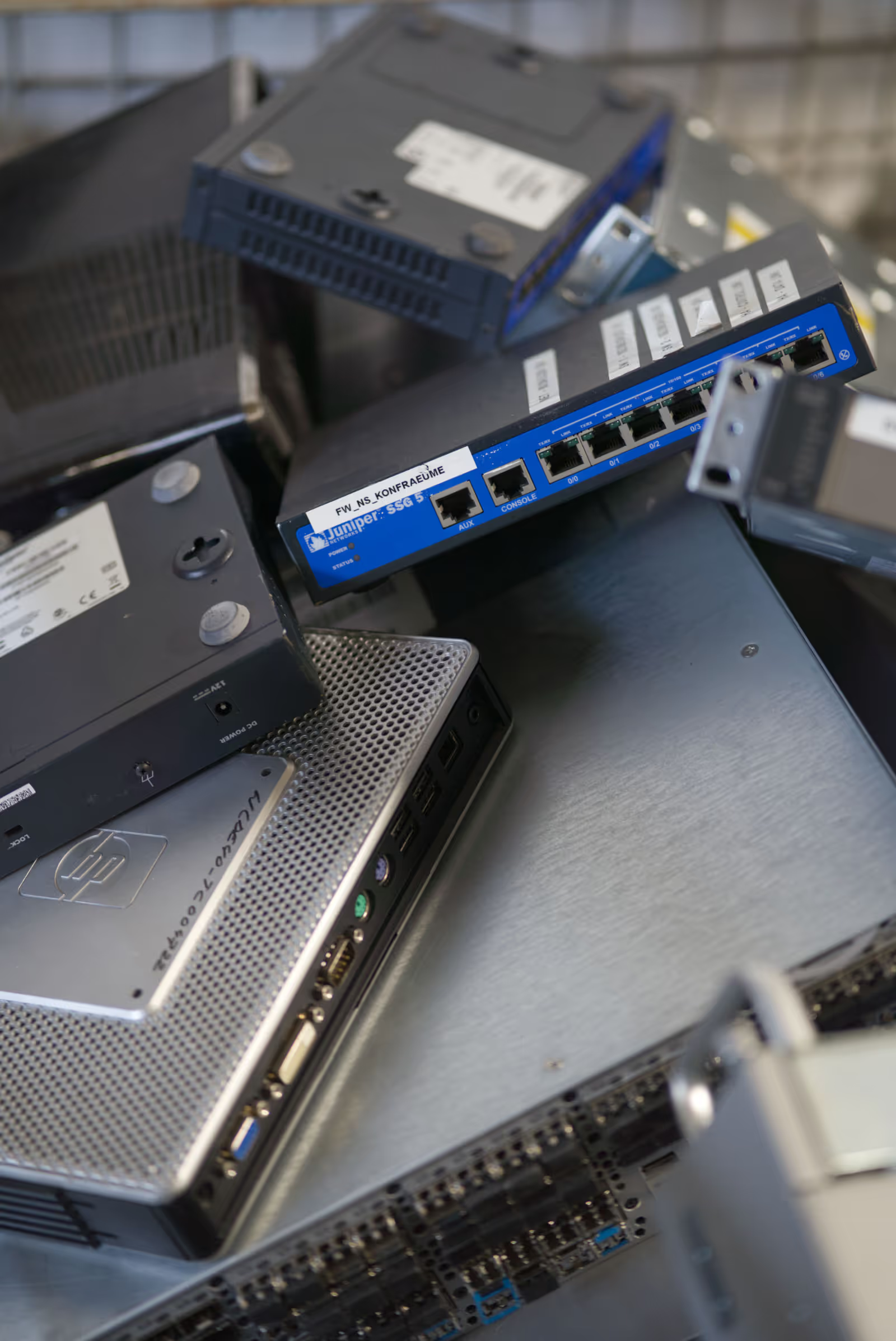
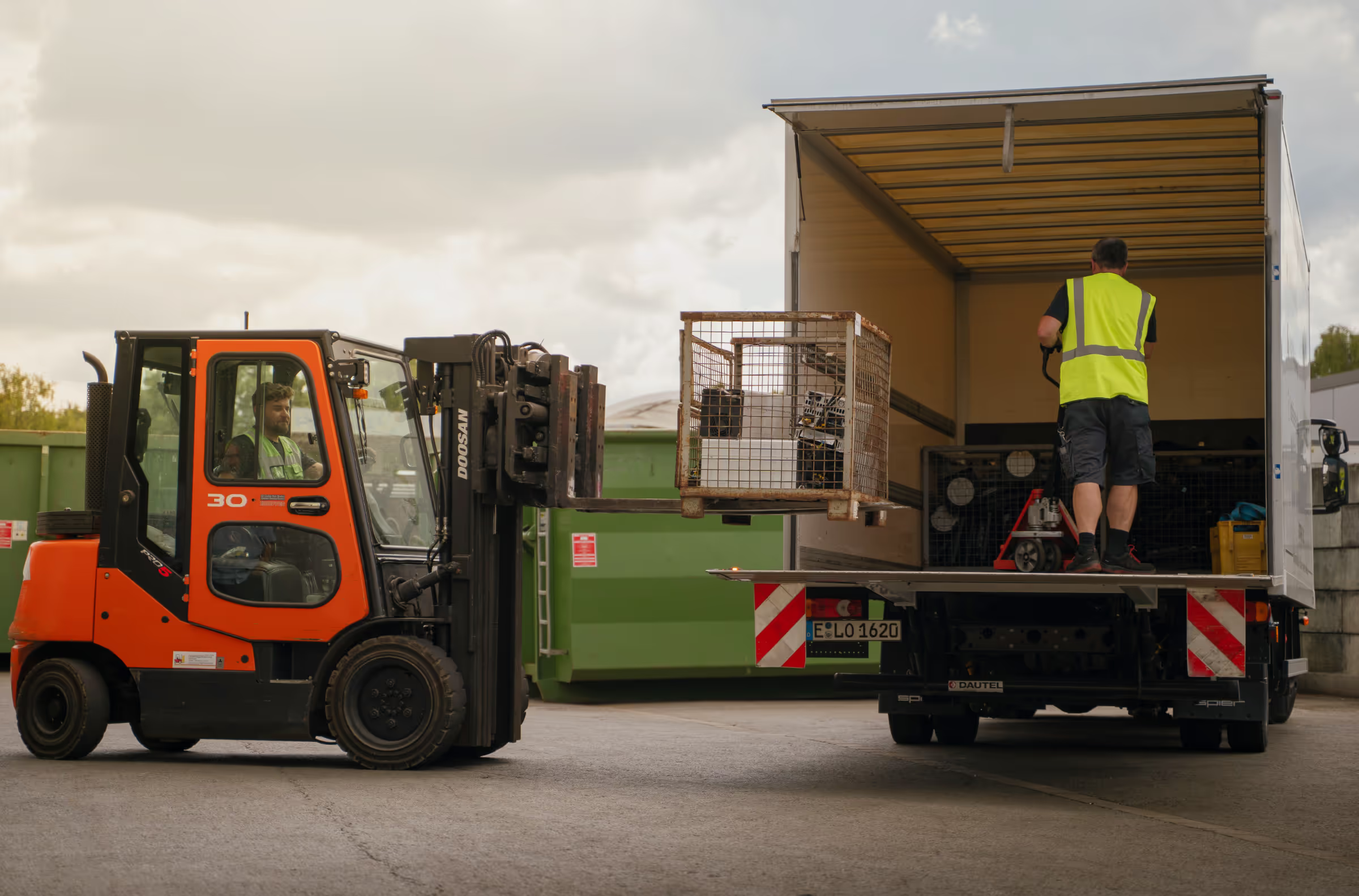
- Procurement, dismantling, and characterization of selected material flows as input for mechanical processing
- Development and testing of product-specific mechanical processing concepts for preparing EoL products for lithium and NMC recovery processes
- Recovery of lithium as lithium carbonate from Li-containing glass-ceramic powder
- Process development and implementation for the recovery of NMC materials
- Assessment of industrial transferability under ecological and economic aspects
- Use of recyclates in active material synthesis and cell construction. Derivation of quality requirements for metal salts and identification of a suitable recyclate proportion for the production of new lithium-ion batteries.
- Collection of relevant research results from the project for industrial implementation
Our Role
The project will provide important insights and results in the field of circular economy, recyclate recovery, and reintegration in battery cell production. It will investigate the potential of secondary raw material sources and the economic and ecological added value that can be generated from them. This is relevant for both the North Rhine-Westphalian and supra-regional waste management sectors, as well as for the German battery industry.
The results will also contribute to gaining important insights into the possibility of closing the loop for EoL products for which this has not yet been achieved, as well as the possibilities and limitations of using recyclates from non-battery material flows. The North Rhine-Westphalian recycling industry has a broad network of stakeholders who must position themselves for new challenges against the backdrop of rising raw material prices and strict regulatory requirements. The massive expansion of battery production capacities and the associated demand for raw materials are opening up a new market for the recycling industry. This project will investigate the requirements of this market for secondary raw materials and the necessary infrastructure. Thus, the project supports the strategy presented by the EU Commission for securing critical raw materials and offers a concrete approach to increasing North Rhine-Westphalia's supply security for mineral raw materials.
An additional expansion of the North Rhine-Westphalian recycling industry through the development of new markets also supports the strengthening of NRW as an economic hub. This provides the participating partners with a knowledge advantage in the field of recyclates from non-battery products.
Funded by: